
How to Choose the Right Empty Disposable Vape Hardware for Live Resin & Liquid Diamonds
Contents
- 1. Why Extract Profiles Matter When Choosing Empty Disposable Vape Hardware
- 2. Why Standard Distillate Hardware May Not Suit Empty Disposable Vape Hardware for Heavy Extracts
- 3. Key Empty Disposable Vape Hardware Specifications for Heavy Extracts
- 4. Voltage Control and Preheat Features for Empty Disposable Vape Hardware
- 5. Selecting Empty Disposable Vape Hardware: Technical Comparison by Oil Type
- 6. B2B Procurement and Compliance
- 7. Featured Hardware
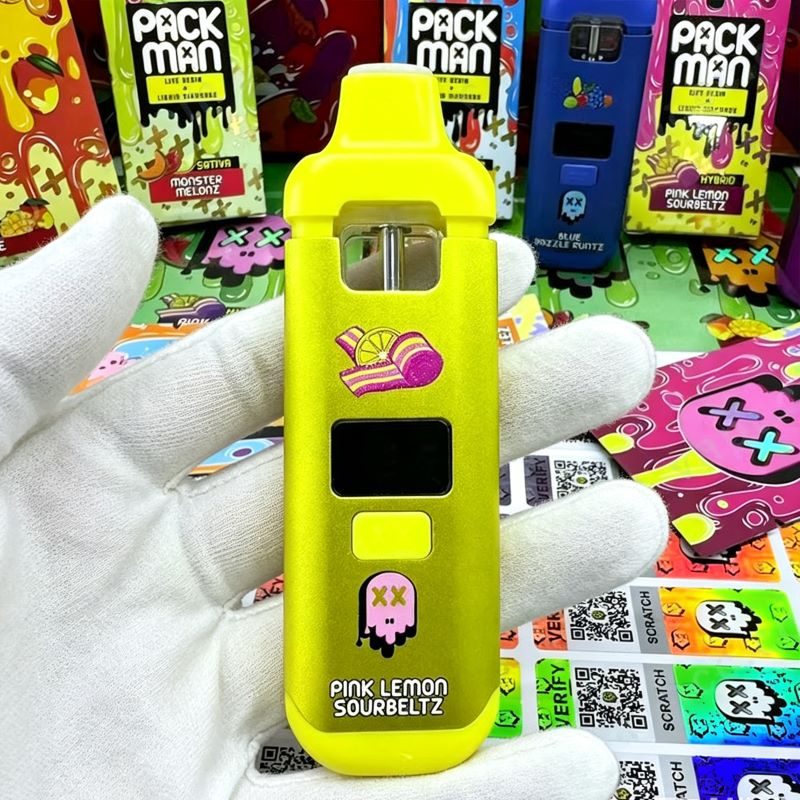
Live Resin and Liquid Diamonds require more than a standard vaporizer format. Their terpene content, viscosity, and potential crystallization behavior can place greater demands on oil intake, heating uniformity, airflow, and sealing performance. For extractors and brands, choosing the right empty disposable vape hardware is a critical technical purchasing decision.
For extractors, brands, and dispensaries, selecting the right empty disposable vape hardware is a technical purchasing decision rather than a purely cosmetic one. Vapacc supplies hardware and custom retail packaging solutions entirely empty; all devices and packaging units are shipped without oil, liquid, THC, CBD, or plant extracts.
Why Extract Profiles Matter When Choosing Empty Disposable Vape Hardware
Live Resin extract profiles
Live Resin is generally associated with a terpene-rich extract profile and a more complex aromatic composition than standard distillate. The higher terpene content can influence flow behavior, flavor retention, and the way the formulation interacts with the heating core.
For hardware buyers, the primary concern is maintaining consistent oil contact with the heating surface without exposing the formulation to excessive heat. A device designed only for lower-viscosity distillate may experience restricted flow or inconsistent vapor production when paired with a heavier Live Resin formulation.
Liquid Diamonds behavior
Liquid Diamonds formulations can also present a higher-viscosity challenge, depending on the formulation, temperature, and level of crystallization. If the material becomes too thick or begins to separate, small intake holes and narrow oil pathways may restrict movement toward the heating element.
This is why empty disposable vape hardware for Liquid Diamonds should be evaluated with larger intake apertures, controlled voltage, and a suitable preheat function. These features do not eliminate every possible clog or leak, but they can improve oil movement when properly matched to the formulation.
Why Standard Distillate Hardware May Not Suit Empty Disposable Vape Hardware for Heavy Extracts
Standard distillate is often easier to move through compact oil paths than thicker extract formulations. Hardware optimized for distillate may therefore use smaller intake openings or a heating profile that is not ideal for terpene-rich or highly viscous oils.
Industry hardware suppliers commonly identify large intake apertures, ceramic heating cores, postless structures, and controlled low-temperature operation as important design factors for thick oils. However, supplier specifications should be treated as starting points and verified through sample testing with the buyer’s intended filling process.asmvape
Key Empty Disposable Vape Hardware Specifications for Heavy Extracts
Aperture size and intake holes
The intake aperture determines how efficiently oil reaches the heating element. When the opening is too small, thicker formulations may move slowly, create restricted saturation, or contribute to clogging during storage and use.
For Live Resin and Liquid Diamonds, buyers should evaluate 1.8 mm to 2.0 mm intake openings or multi-hole configurations. One supplier-listed empty device, for example, specifies four 1.8 mm oil intake holes, while another empty hardware listing identifies a four-hole 1.6 mm configuration for high-viscosity oils.vappex+1
Larger openings are not automatically better in every application. If the aperture is oversized relative to the formulation, fill volume, tank geometry, or heating core, the device may become more vulnerable to flooding or leakage.
A practical B2B evaluation should examine the complete oil path rather than the aperture alone. Review the following specifications together:
Intake-hole diameter and number.
Ceramic porosity and surface area.
Tank geometry and oil-path length.
Fill volume and filling temperature.
Mouthpiece and central-airway design.
Storage orientation and temperature conditions.
The final aperture specification should be approved through a filled sample trial conducted by the customer or authorized production facility. Vapacc supplies the carrier hardware entirely empty and does not provide oils or extracts for compatibility testing.
Ceramic heating elements
Porous ceramic heating cores are widely used for thick-oil hardware because they can distribute heat across a broader surface than many traditional wick-based designs. A properly engineered ceramic core can reduce localized hotspots and support more consistent vaporization.
Ceramic technology is particularly relevant when brands want to protect flavor characteristics associated with terpene-rich formulations. Industry hardware comparisons commonly highlight ceramic, wickless, and postless designs for uniform heating and improved compatibility with thick extracts.asmvape
The material label alone is not enough to determine performance. Buyers should request the core’s resistance, porosity, heating area, activation behavior, and recommended operating voltage before selecting empty disposable vape hardware.
A useful technical review should include:
Ceramic composition and structure.
Coil or heating-cell resistance.
Heat-up time.
Operating-voltage range.
Oil saturation behavior.
Consistency across multiple draws.
Performance after storage and transport.
Traditional wick-based systems may be less suitable for heavy extracts when they create uneven saturation or localized heating. A full ceramic or porous ceramic structure is usually worth evaluating when flavor consistency and thick-oil flow are priorities.
Voltage Control and Preheat Features for Empty Disposable Vape Hardware
High-viscosity formulations generally benefit from controlled heat rather than aggressive output. Excessive voltage can increase the risk of overheating the heating surface and may negatively affect flavor quality, especially when the formulation contains delicate terpene components.
A useful starting range for heavy extracts is approximately 2.4 V to 2.8 V, but this should not be treated as a universal setting. The correct output depends on resistance, battery architecture, ceramic design, airflow, formulation, and the intended vapor volume.
A preheat function can help reduce viscosity before the main draw. This is especially useful when Liquid Diamonds formulations become less mobile after exposure to cool storage or when the oil has difficulty reaching the heating surface.
Preheat should be calibrated rather than used continuously. Buyers should test preheat duration, temperature rise, oil movement, flavor quality, battery consumption, and whether the cycle creates flooding or airway obstruction.
Some hardware suppliers list adjustable operating ranges beginning around 2.2 V and extending above 3.0 V, while other empty devices use a fixed output such as 3.2 V. These differences demonstrate why a device’s nominal voltage must be reviewed together with resistance and heating-core design.asmvape+1
Airflow and pressure management
Airflow performance depends on the relationship between the mouthpiece, central airway, intake holes, heating chamber, and activation system. A restricted or poorly balanced path can create excessive draw resistance, uneven vapor delivery, or pressure changes that move oil toward the mouthpiece.
Post-filling capping is another important consideration. If the mouthpiece is installed too quickly, too slowly, or without a controlled sealing procedure, pressure inside the reservoir may contribute to seepage, airlock formation, or oil migration.
Brands should validate the following production variables:
Fill volume and headspace.
Filling temperature.
Time between filling and capping.
Mouthpiece fit and seal compression.
Cooling time before packaging.
Vertical versus horizontal storage.
Airflow resistance after transport.
A supplier listing for empty hardware recommends rapid capping after filling to establish a secure seal, while also advising upright storage at stable room temperature. These instructions should be confirmed against the specific device design and the customer’s own production conditions.vappex
Selecting Empty Disposable Vape Hardware: Technical Comparison by Oil Type
The table below provides a qualification framework for selecting empty disposable vape hardware. The ranges are starting points for engineering trials, not universal operating guarantees.
| Oil type | Ideal voltage | Recommended aperture size | Heating core type |
|---|---|---|---|
| Distillate | Approximately 2.8 V–3.4 V | Approximately 1.2 mm–1.5 mm | Standard ceramic or suitable wickless ceramic core |
| Live Resin | Approximately 2.4 V–2.8 V | Approximately 1.8 mm–2.0 mm or multi-hole intake | High-porosity ceramic core |
| Liquid Diamonds | Approximately 2.4 V–2.8 V with preheat evaluation | Approximately 1.8 mm–2.0 mm or multi-hole intake | High-porosity ceramic core with controlled preheat compatibility |
Live Resin and Liquid Diamonds typically warrant more attention to oil-path clearance and heat control than standard distillate. A supplier product page lists four 1.8 mm intake holes, 1.4-ohm resistance, and a 3.2 V constant output on one empty disposable model, illustrating how aperture, resistance, and voltage must be assessed as a combined system.vappex
Before a bulk order, brands should test the selected empty disposable vape hardware using their actual formulation, fill equipment, capping method, and storage conditions. Vapacc products and packaging are supplied entirely empty and contain no oil, liquid, THC, CBD, or plant extracts.
B2B Procurement and Compliance
Request material documentation
Heavy-extract hardware should be reviewed for both performance and material suitability. Buyers should request documentation covering the tank, mouthpiece, seals, heating core, battery components, and any material that may contact the oil path or vapor path.
Factory-direct lead-free compliance and heavy-metal testing should be part of the procurement process. Buyers should request current test reports, batch references, material declarations, and quality-control records rather than relying only on general marketing language.
A technical procurement file should ideally include:
Heavy-metal and lead-free test documentation.
Tank and seal material specifications.
Heating-core resistance and operating range.
Battery capacity and charging information.
Leak, draw, and activation test results.
Sample approval records.
Lot-control and inspection procedures.
Confirm Custom Packaging Compatibility with Your Empty Disposable Vape Hardware
Custom retail packaging must be designed around the actual hardware dimensions. Small variations in device height, diameter, mouthpiece shape, charging port placement, or oil-window position can affect inserts, cartons, labels, sleeves, and display boxes.
Vapacc provides custom retail packaging solutions matched to empty hardware formats. Buyers should confirm dielines, tolerances, artwork requirements, packaging materials, and whether the packaging will be supplied flat-packed or assembled.
All packaging units supplied by Vapacc are empty retail packaging components. They are not filled with oil, liquids, THC, CBD, or plant extracts.
Approve samples before production
A sample order should be tested before committing to mass production. Testing should reflect the conditions the finished product will encounter, including filling, capping, transport, storage, charging, and repeated use.
Track performance using measurable criteria:
Clogging frequency.
Leakage or seepage rate.
Draw resistance.
Vapor consistency.
Flavor stability.
Preheat response.
Battery performance.
Packaging fit and visual quality.
No hardware specification can guarantee identical results across every formulation. Terpene concentration, viscosity, crystallization behavior, fill temperature, and storage conditions can all influence final performance, so customer-specific validation remains necessary.
Final Checklist for Wholesale Buyers
Before placing a bulk order for empty disposable vape hardware, confirm the following:
The device is compatible with the formulation’s viscosity and terpene profile.
The intake system uses an appropriate aperture, such as 1.8 mm to 2.0 mm or a suitable multi-hole design.
The heating core provides uniform output at the intended voltage.
Low-voltage operation around 2.4 V to 2.8 V has been evaluated where appropriate.
Preheat timing has been tested for Liquid Diamonds formulations.
Airflow, sealing, capping, and storage procedures have been validated.
Heavy-metal and lead-free documentation is available.
The device fits the intended custom retail packaging.
Production samples have passed testing before the wholesale order is released.
Vapacc supports B2B buyers with factory-direct empty disposable vape hardware, custom specifications, retail packaging solutions, and sample evaluation. Contact Vapacc to request bulk hardware details, heavy-extract-compatible configurations, custom packaging options, and entirely empty product samples for your qualification process.